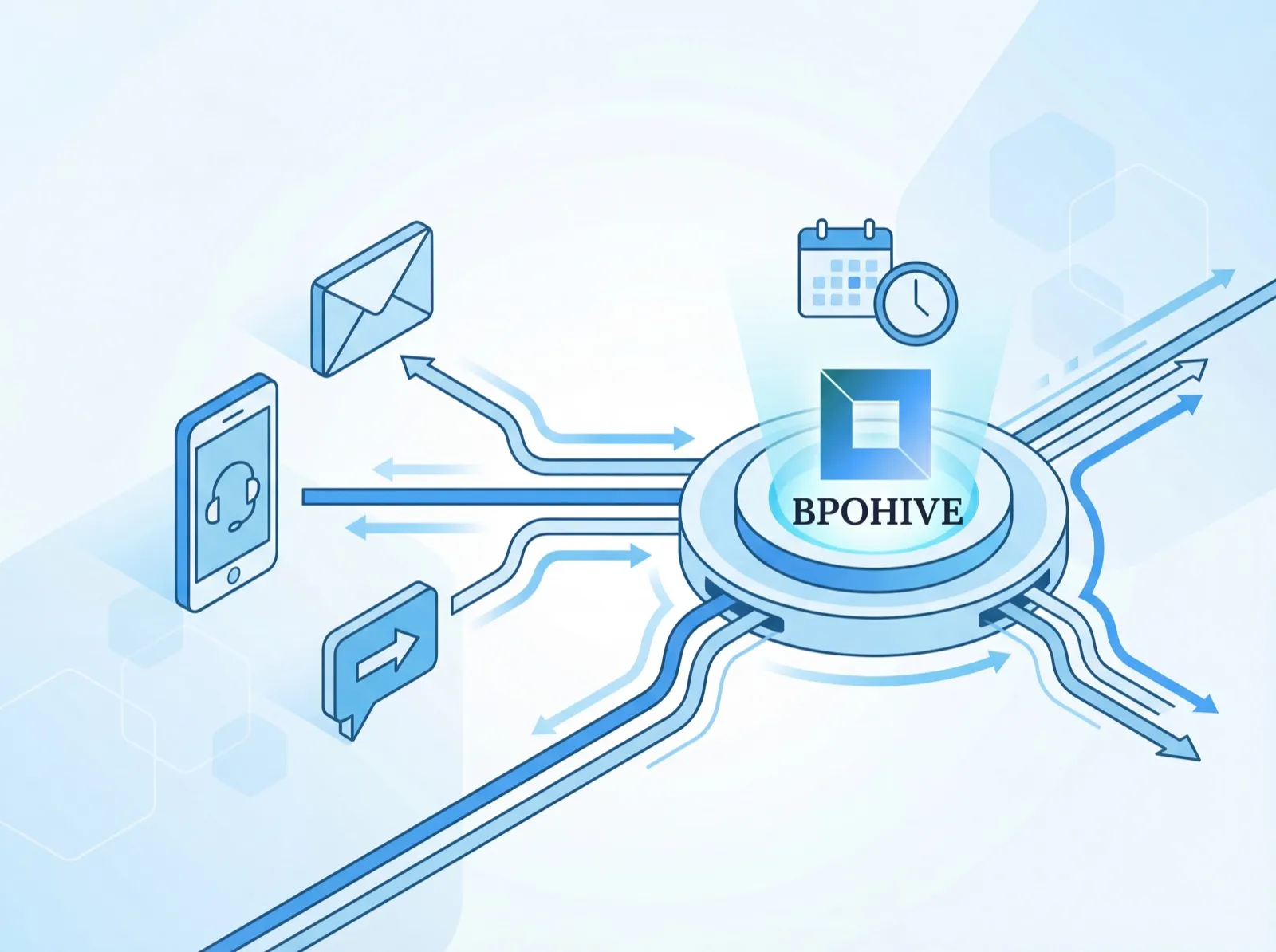
B2B appointment setting in the GCC is not simply a matter of translating a cold email and buying a regional contact list. Strong campaigns identify the right accounts, understand how decisions are made in each market, coordinate phone, email, and LinkedIn outreach, qualify genuine interest, and place sales-ready meetings directly on the client’s calendar.
The short answer
Gulf companies can use managed appointment setting to create a more predictable pipeline without building every outbound function internally. The winning approach is localized, relationship-aware, and measurable: start with a precise ICP, test a defined campaign, learn from real conversations, and scale only what the market validates.
How B2B buying works across the Gulf countries
The GCC includes six distinct markets: Saudi Arabia, the United Arab Emirates, Qatar, Kuwait, Bahrain, and Oman. They are commercially connected, but they are not one identical audience. Company structures, buyer roles, sector priorities, language preferences, procurement steps, and market size can differ substantially.
Across many Gulf B2B sectors, outreach performs better when it supports trust and relevance instead of pushing for an immediate transaction. Decision-making may involve several stakeholders, and a credible first conversation often depends on showing that you understand the prospect’s business, market, and priorities.
A practical GCC outbound plan should therefore answer:
- Which countries and cities genuinely fit the offer?
- Which industries, company sizes, ownership types, and buyer roles matter?
- Should the first approach be in English, Arabic, or adapted by segment?
- Who influences the purchase in addition to the final decision-maker?
- Which proof points create credibility in that particular market?
- How will local working patterns, holidays, and time zones affect outreach?
| Campaign question | Weak approach | Stronger GCC approach |
|---|---|---|
| Targeting | One broad “Middle East” list | Separate segments by country, industry, company profile, and buyer role |
| Messaging | Generic global pitch | Value proposition linked to the prospect’s market and operating priorities |
| Language | One language for every account | English or Arabic selected according to the audience and conversation |
| Outreach | One email sequence | Coordinated phone, email, and LinkedIn touchpoints |
| Success | Counting activity only | Tracking connections, conversations, qualification, bookings, and attendance |
Why localization matters in GCC appointment setting
Localization is broader than language. It means adapting the campaign to the way a specific market and buyer segment evaluates relevance. A technology company targeting large Saudi enterprises should not automatically use the same message, contacts, cadence, or qualification criteria as a professional-services firm targeting UAE SMEs.
Effective localization can include country-specific account lists, appropriate calling windows, locally relevant proof, bilingual scripts where useful, buyer-role variations, sector-specific objections, and qualification questions that reflect how purchases are actually considered.
The objective is not to imitate local buyers or make assumptions about them. It is to gather enough evidence to approach each audience with precision and respect.
Why an omnichannel system works better than isolated outreach
Senior buyers are busy, and no single channel reaches every prospect consistently. BPO Hive coordinates phone, email, and LinkedIn so that each channel supports the others.
- Phone creates direct conversations, surfaces objections, and tests whether the offer is relevant.
- Email provides context, proof, follow-up, and information the prospect can share internally.
- LinkedIn helps confirm identity, establish professional credibility, and maintain contact with difficult-to-reach buyers.
In simple terms: email can warm the account, LinkedIn can validate the people involved, and phone can convert attention into a real conversation. The exact mix should follow the ICP and campaign evidence rather than a fixed template.

How BPO Hive’s ACE Strategy builds a GCC campaign
BPO Hive uses the ACE Strategy: Analyze, Strategize, Execute, and Scale. It turns outbound from a collection of activities into a complete learning and appointment-setting system.
1. Analyze
We begin by understanding exactly who the client is, what the offer solves, who buys it, and what the ideal prospect looks like. We ask detailed questions about the ICP, target countries, audience size, buyer roles, average deal, sales cycle, market experience, previous campaigns, proof points, common objections, and what should qualify a meeting.
2. Strategize
We turn the analysis into a campaign plan: country and account segments, contact roles, positioning, qualification criteria, scripts, objection responses, channel mix, follow-up sequence, and touchpoint volume. A Validation Sprint can start with 10,000 touchpoints, where a touchpoint is one call, email, LinkedIn connection request, or LinkedIn message.
3. Execute
Our team runs the campaign across the agreed channels. We track activity, connected calls, real conversations, qualified interest, booked appointments, and attendance. Interested prospects are booked directly on the client’s calendar, confirmed, and handed over with the context the sales team needs.
4. Scale
After the validation period, we review which countries, segments, messages, and channels produced the strongest evidence. If the client wants to continue, we expand the parts of the system that worked and refine the parts that did not. The goal is disciplined scaling, not more activity for its own sake.
What clients can see and measure
BPO Hive clients receive more than a meeting list. The campaign portal provides visibility into the movement through the outbound funnel, including:
- total calls and other touchpoints completed;
- calls that connected with a person;
- connections that became real conversations;
- qualified prospects and appointments booked;
- meeting confirmations and attendance;
- objections, market feedback, and segment performance.
That evidence helps the client understand not only how many appointments were generated, but also what the market is saying and where future sales effort should be focused.
A transparent campaign estimate
A $3,000 Validation Sprint can fund approximately 10,000 touchpoints. Based on the planning assumptions used in BPO Hive’s campaign calculator, that may produce around 150 conversations and an estimated 10–15 booked B2B demos. These figures are estimates—not guarantees—and actual performance varies by the offer, ICP, market, data quality, channel mix, and qualification criteria.
Use the outbound campaign calculator to view proportional estimates at different investment levels.
Which companies can benefit from GCC appointment setting?
A managed outbound campaign can be valuable for Gulf-based businesses expanding within the region and international companies entering GCC markets. Common use cases include:
- SaaS, technology, cybersecurity, cloud, and enterprise software;
- consulting, training, recruitment, and professional services;
- financial, insurance, and business-support services;
- logistics, industrial, energy, construction, and property services;
- companies testing a new GCC country, vertical, or buyer segment;
- sales teams whose closers need more qualified first meetings.
It works best when the offer solves a meaningful business problem, the target audience can be defined, the potential deal supports outbound acquisition, and the client’s sales team can follow up properly after the handoff.
Why companies choose BPO Hive
BPO Hive combines campaign strategy, data, trained outreach teams, phone, email, LinkedIn, qualification, calendar booking, confirmations, reporting, and optimization in one managed system. The value is not simply staffing cost; it is the ability to analyze a market, test it through structured execution, and scale from evidence.
Explore our B2B appointment-setting service, cold calling, cold email outreach, LinkedIn lead generation, and lead research.
Frequently asked questions
Which Gulf countries can BPO Hive target?
Campaigns can be designed for Saudi Arabia, the UAE, Qatar, Kuwait, Bahrain, and Oman—either individually or as a segmented regional program. We do not treat all six markets as one identical list.
Does GCC appointment setting require Arabic?
It depends on the country, industry, account, and buyer role. Many B2B conversations happen in English, while Arabic can improve access, trust, or clarity with some audiences. The language plan should be decided during analysis.
Can one campaign target the whole GCC?
Yes, but the campaign should still segment audiences by country and account type. That allows the team to compare performance and adapt the messaging rather than assuming one approach will work everywhere.
Does BPO Hive guarantee a specific number of meetings?
No. Campaign outcomes depend on the offer, audience, data, market conditions, channel mix, and qualification criteria. We use estimates and a validation process rather than guaranteeing an artificial meeting number.
Build your GCC pipeline with a managed outbound system
Tell us which Gulf markets you want to reach and what a qualified opportunity means to your business. We will help you analyze, strategize, execute, and scale.